



Lecture
REGISTER
Event Date: April 26th, 2024
1:00pm-2:00pm Pacific
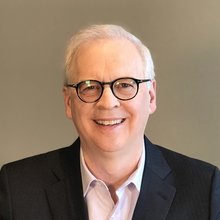
Steven J. Davis: “The Big Shift to Work from Home”
Why did the shift to work from home endure, rather than reverting to pre-pandemic levels? Join us on April 26 for a lecture by Steven J. Davis, the Thomas W. and Susan B. Ford Senior Fellow at the Hoover Institution and Senior Fellow at the Stanford Institute for Economic Policy Research (SIEPR). Davis will consider how work-from-home rates vary by worker age, sex, education, parental status, industry and local population density, and why it is higher in the United States than other countries, as well as some implications for pay, productivity, and the pace of innovation.
Learn More >Authors Meet Critics
REGISTER

Event Date: May 1st, 2024
12:00pm-1:30pm
Authors Meet Critics: “Puta Life: Seeing Latinas, Working Sex,” Juana María Rodríguez
Join us on May 1 for an Authors Meet Critics panel on the book Puta Life: Seeing Latinas, Working Sex, by Juana María Rodríguez, Professor in the Department of Ethnic Studies at UC Berkeley. Professor Rodriguez will be joined in conversation by Clarissa Rojas, Assistant Professor of Chicana/o Studies at UC Davis, and Milena Britto, Associate Professor of Literature at the Federal University of Bahia and currently a Visiting Professor at UC Berkeley. The discussion will be moderated by Alberto Ledesma, Assistant Dean for Diversity, Inclusion, and Equity in the Division of Arts & Humanities at UC Berkeley.
Learn More >Book Talk
REGISTER
Event Date: May 1st, 2024
3:30pm-5:00pm
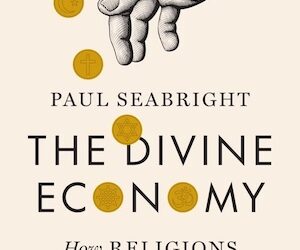
Paul Seabright: “The Divine Economy”
Register to join us on May 1 at 3:30pm for a lecture by Paul Seabright, British Professor of Economics in the Industrial Economics Institute and Toulouse School of Economics at the University of Toulouse, France, focused on his book "The Divine Economy: How Religions Compete for Wealth, Power and People," a novel economic interpretation of how religions have become so powerful in the modern world. Moderated by Duncan MacRae, Associate Professor in the Department of Ancient Greek and Roman Studies at UC Berkeley.
Learn More >Special Event
REGISTER
Event Date: May 8th, 2024
2:00pm-3:00pm
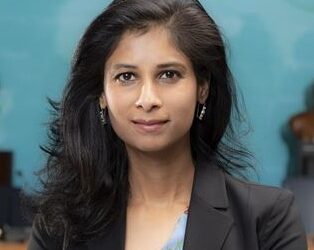
Global Economic Developments: A View from the IMF
UC Berkeley students, faculty, and staff are invited to join us on May 8, 2024 from 2:00pm-3:00pm for a town hall meeting with Gita Gopinath, the First Deputy Managing Director of the International Monetary Fund. The event will feature an interview of Dr Gopinath conducted by current UC Berkeley students on topics ranging from debt sustainability to economic fragmentation and the role of the dollar in the global economy, followed by an open question period.
Learn More >Panel
Recap

Published April 14, 2024
Storytelling and the Climate Crisis
Contemporary writers and activists have described the climate crisis as, in part, a crisis of the imagination, of culture, and of storytelling. Recorded on March 11, 2024, this panel featured a group of authors and scholars of different genres — science fiction, journalism, history, literary fiction, and comedy — discussing how the climate crisis has impacted their craft and what practices of storytelling have to offer us at this pivotal moment in human history. This panel was co-sponsored by the UC Berkeley Department of English, the Department of History, and the Berkeley School of Journalism.
Learn More >New Directions
Recap

Published April 14, 2024
New Directions in Greening Infrastructure
Recorded on March 20, 2024, this panel features three early-career scholars from UC Berkeley presenting their research on the greening infrastructure and the green energy transition. The panel included Johnathan Guy, PhD Candidate in Political Science; Caylee Hong, a PhD candidate in Anthropology, and Andrew Jaeger, PhD Candidate in Sociology. The panel was moderated by Daniel Aldana Cohen, Assistant Professor of Sociology at UC Berkeley. Co-Sponsored by the Socio-Spatial Climate Collaborative, the Berkeley Climate Change Network, and the Berkeley Economy and Society Initiative.
Learn More >California Spotlight
Recap

Published April 5, 2024
Conservatorship: Inside California’s System of Coercion and Care for Mental Illness
Recorded on March 18, 2024, this California Spotlight panel focused on Alex V. Barnard’s book, "Conservatorship: Inside California’s System of Coercion and Care for Mental Illness. Professor Barnard was joined by Lauren Rettagliata, whose comments on her lived experience of the system complement Barnard's discussion of his research. The discussion was moderated by Jonathan Simon, Lance Robbins Professor of Criminal Justice Law at Berkeley Law.
Learn More >Authors Meet Critics
Recap

Published April 5, 2024
Authors Meet Critics: “Terracene: A Crude Aesthetics,” Salar Mameni
Recorded on March 4, 2024, this Authors Meet Critics panel focused on Terracene: A Crude Aesthetics, by Professor Salar Mameni, Assistant Professor in UC Berkeley’s Department of Ethnic Studies. Professor Mameni was joined by Mayanthi Fernando, Associate Professor of Anthropology at UC Santa Cruz; Sugata Ray, Associate Professor of South and Southeast Asian Art and Architecture in the Departments of History of Art and South & Southeast Asian Studies at UC Berkeley; and Stefania Pandolfo, Professor of Anthropology at UC Berkeley.
Learn More >Recap
Published April 2, 2024
Understanding AI: Humanities x Social Sciences x Technology
While advances in the performance of AI models have seen enormous successes, a profound understanding of how learning happens inside the models remains to be thoroughly explored. On March 6, 2024, Social Science Matrix hosted a symposium focused on understanding and interpreting AI, an important new frontier in AI research. Speakers identified immediate challenges in AI interpretability and explored how the humanities, social sciences, and the tech world can join forces in this highly consequential research.
Learn More >Culture
Interview
Published March 29, 2024
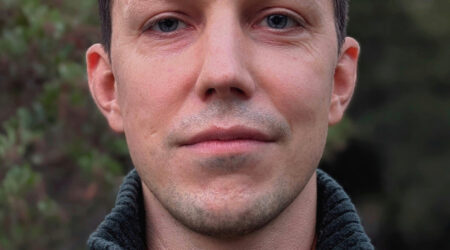
Confiscated Objects of the Cultural Revolution: A Visual Interview with Puck Engman
Read an interview with Puck Engman, Assistant Professor in History at UC Berkeley and a historian of China in the postwar era, whose research concerns the reorganization of state and society in the first 30 years of the People's Republic of China, and the transition from command economy to market economy at the end of the 20th century.
Learn More >